
How much does training cost for ANSYS, Fluent, CFX, Maxwell, ICEM CFD, Icepak, AQWA, etc.? This is a question many engineers and managers often ask when considering training in the ANSYS family of products. The answer is that it can cost anywhere from zero to several thousand dollars, depending on a variety of factors.
How can training be free? If you are a current customer you may find that you can download training files or view some videos on various ANSYS product simulation topics. This training really isn’t free, since you or your company is paying for maintenance of the ANSYS software which gives you access to the customer portal. We at PADT also provide free content, typically in the form of our webinars which can be viewed at http://padtincevents.webex.com. Click on, “PADT ANSYS Webinar Series.”
You might also find some free training out there on the internet. Alternatively, you might find that training is free or reduced but with a catch, such as the need to purchase more software.
That all being said, as I’m sure you are aware, you get what you pay for. Maybe what you find for free is good enough for what you are trying to do. However, you most likely won’t be able to find free training that’s tailored to your needs or your organization’s specific simulation applications. If you have a question about the training material or what the recorded instructor just said, you most likely will not be able to ask about it. You’ll either be left in the dark, or will have to expend extra effort to figure it out on your own. There are costs associated with both of those options.
So, what about the cost of paying for training? If you are attending a class by yourself, you can expect to pay a minimum of about US$500.00 per day for your training class. You may have travel expenses to consider in addition to that.
If you are part of a group that needs training, then group rates come into play which can significantly reduce the cost of training per student. A few thousand dollars to train a group of 8 or 10 engineers will typically be a small investment relative to the cost of the simulation software. Further, at PADT we often customize our training material for our training customers. This is a further benefit of group training.
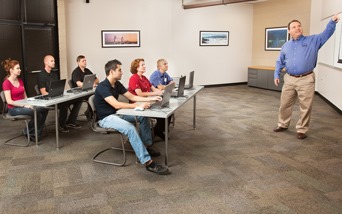
At PADT group rates kick in at about the 4 students per class size. Using group rates can be a very effective way to get productive training into your organization, especially if travel is involved since only one instructor may need to travel vs. several students. Web-based training is another option. This was discussed by Eric Miller of PADT in a prior blog entry, https://www.padtinc.com/blog/the-focus/ansys-training-face-to-face.
Further, PADT’s customer feedback has consistently shown that our training classes pay for themselves. In other words, increases in productivity due to a quick jump up the learning curve can very quickly return the fees paid for training.
There are other factors to consider in training as well. What is the experience base of the organization providing the training? Do they have real-world experience in using the simulation tools for which they are providing training? What about location, flexibility, and scheduling? Will the provider cancel your class with short notice if there aren’t enough students? These are all things to consider when picking a training provider.
The bottom line is that consideration must be made for the relative benefits of training vs. the amount spent on the training. We at PADT would be glad to answer your questions about training in the ANSYS family of products. You can reach me at ted.harris@padtinc.com. You can view our current training offerings at https://www.padtinc.com/support/software/training.html.